

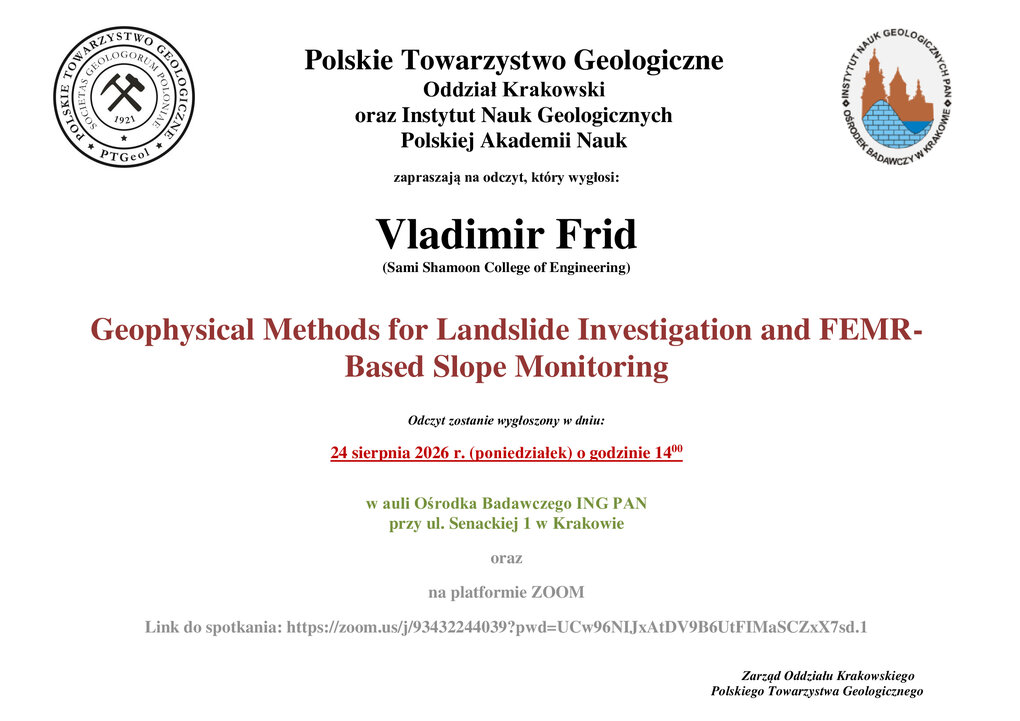
We kindly invite to the lecture by prof. Vladimir Frid in the IGS PAS Krakow Research Centre lecture hall (Senacka 1 Kraków) at 2:00 p.m. on 24th of August 2026
Hearing the lecture is also possible online by ZOOM (link: https://zoom.us/j/93432244039?pwd=UCw96NIJxAtDV9B6UtFIMaSCZxX7sd.1 ID: 934 3224 4039 Access code: 660440
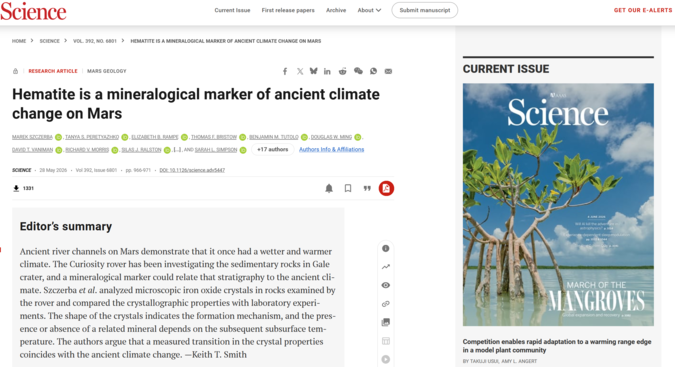
We are proud to announce that Dr hab. Marek Szczerba, Professor at ING PAN—Head of the ING PAN Research Centre in Kraków and a member of the Clay Minerals Research Group at ING PAN—is the joint first author of an article published in the prestigious journal Science.
The publication, entitled “Hematite is a mineralogical marker of ancient climate change on Mars,” presents the results of research into climate changes that occurred on Mars in the past. The scientists analysed mineralogical data from 20 rock samples collected by NASA’s Curiosity rover at different elevations within Gale Crater.
The study demonstrated that the size and structure of hematite crystallites may provide a mineralogical record of the environmental conditions that once prevailed on Mars. The observed differences in hematite crystal size, together with the presence or absence of goethite, made it possible to reconstruct changes in temperature and water availability during successive stages of Gale Crater’s history.
The results indicate that warm groundwater may have persisted in deeper rock layers for approximately 4.7 million years, even as the climate at the Martian surface became increasingly cold and dry. This suggests that potentially habitable environments may have existed beneath the surface of the Red Planet for much longer than previously thought.
The publication contributes to research on the geological and climatic history of Mars and demonstrates how detailed mineral analysis can support the reconstruction of ancient planetary environments.
We warmly congratulate Dr hab. Marek Szczerba, Professor at ING PAN, and the entire research team on this outstanding achievement!
Publication:
M. Szczerba et al., “Hematite is a mineralogical marker of ancient climate change on Mars,” Science, 2026, Vol. 392, No. 6801, pp. 966–971.
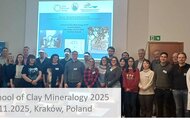
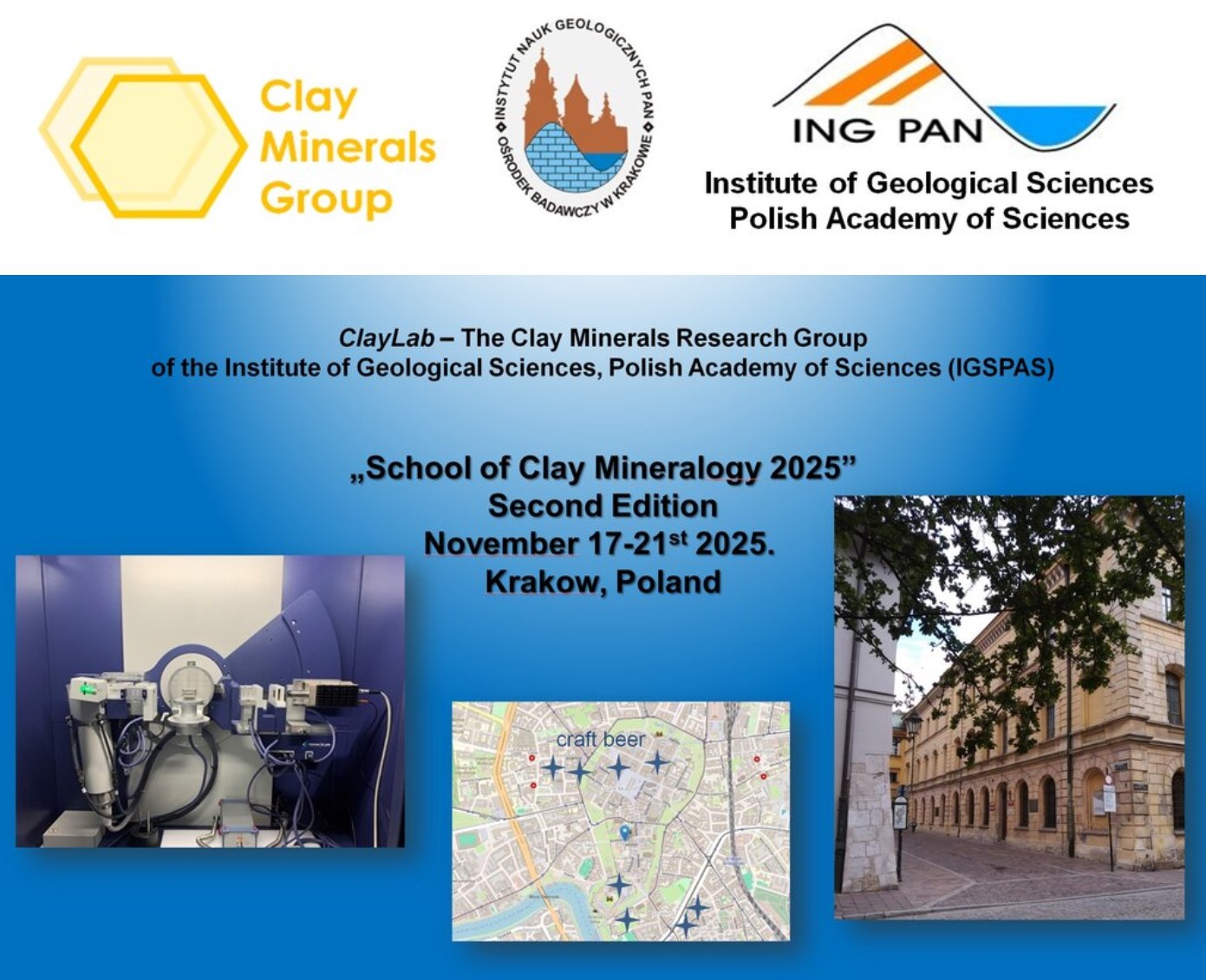
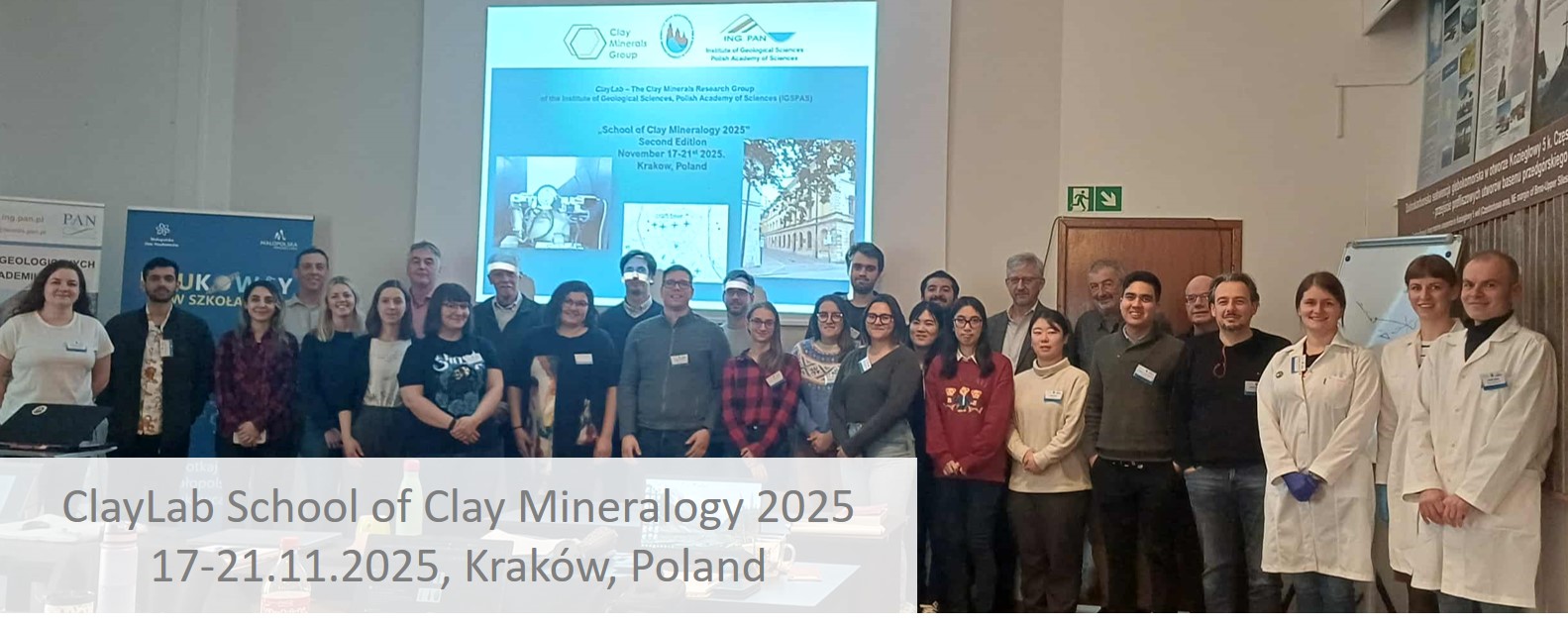
This week at our Research Center in Krakow, the ClayLab team is running a world-famous workshop on clay mineralogy for students, early career academics, and industry professionals. Participants from as far as Japan came to learn about the fascinating world of clay minerals.
The workshop includes a mixture of lectures and hands-on exercises. All basic aspects of clay science are covered, such as clay fraction separation, chemical pretreatments, and interpretation of X-ray diffraction (XRD), Fourier-Transform Infrared Spectroscopy (FTIR), and thermogravimetric data for clay-rich materials.
We are grateful to David Bish (Indiana University, Bloomington, IN, USA), Georgios Chryssikos (Institute of Physical and Theoretical Chemistry, NHRF, Athens, Greece), Reiner Dohrmann (BGR Federal Institute for Geosciences and Natural Resources, Hannover, Germany), Stephen Hillier (James Hutton Institute, Aberdeen, UK), Micheal Plötze (ETH Zürich, Switzerland), and Michał Skiba (Jagiellonian University, Krakow, Poland) for joining us this week to share their knowledge.
 |  |

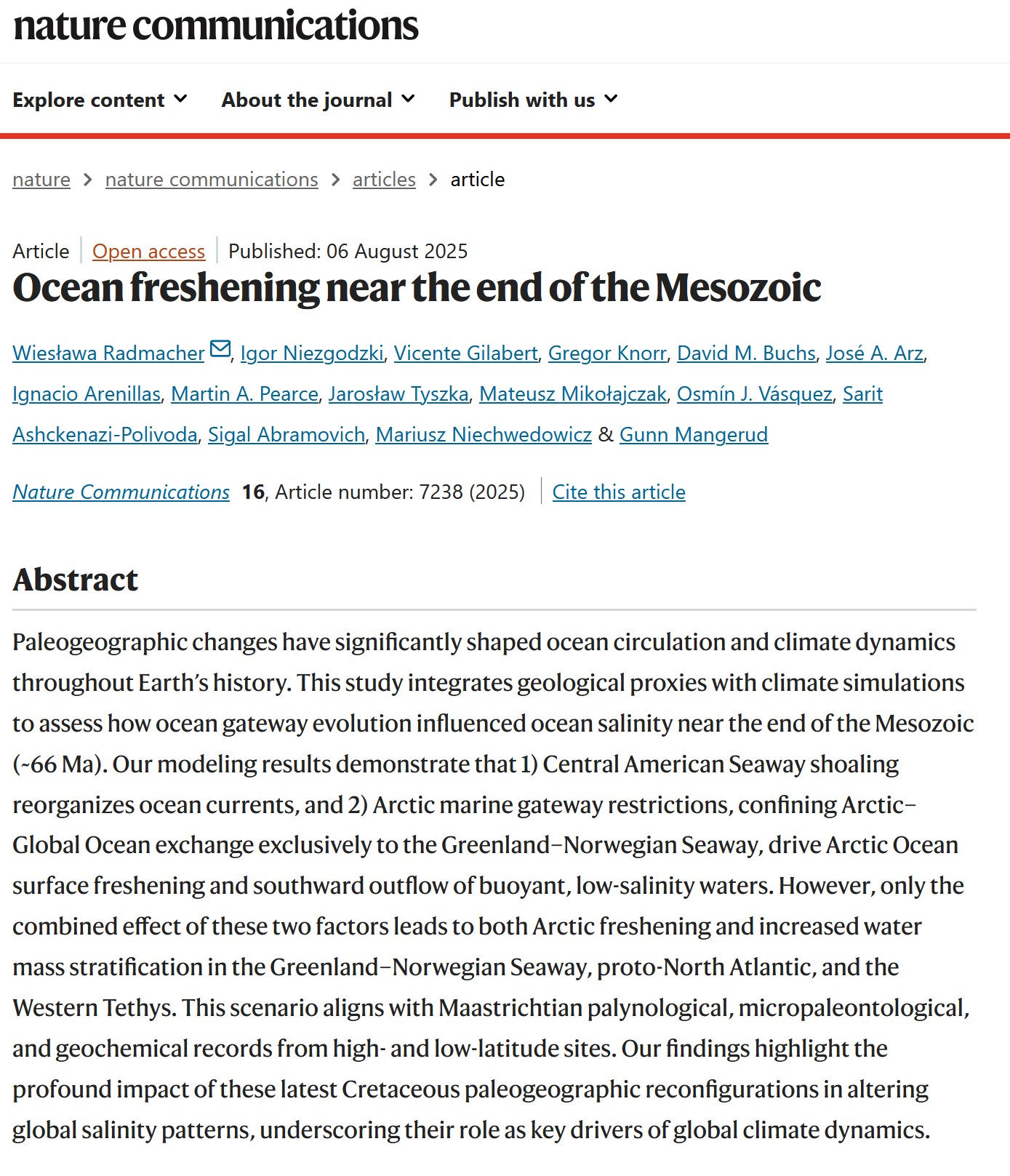
The article “Ocean freshening near the end of the Mesozoic” has been selected by Nature Communications for their Editors’ Highlights in Earth Science.
This collection showcases some of the most interesting recent research published in the journal.
You can find the Editors’ Highlights page here: https://www.nature.com/collections/eihfbddfac
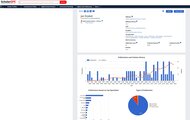
We are proud to announce that Professor Jan Środoń, DSc, employed at the Institute of Geological Sciences of the Polish Academy of Sciences (ING PAN) as a professor at the ING PAN Research Centre in Kraków, has been awarded the title of "Highly Ranked Scholar" for 2024 by ScholarGPS for his outstanding career achievements. This recognition honors his impressive number of publications, the high impact of his work, and the quality of his scientific contributions. As a result, according to the latest 2024 ScholarGPS ranking, Professor Środoń is ranked among the top 0.39 % of the world's best scientists. He is ranked sixth globally in the field of clay minerals, and equally third among scholars in this specialty affiliated with the Polish Academy of Sciences and its institutes.
Our heartfelt congratulations!
ScholarGPS provides quantitative rankings of all researchers, research institutions, universities, and academic programs worldwide. The rankings span 14 broad fields (e.g., medicine, engineering, humanities), 177 disciplines (e.g., surgery, computer science, history), and over 350,000 specializations (e.g., cancer, artificial intelligence, ethics). These rankings are based on a unique methodology that takes into account research productivity (number of publications), impact (citations), and quality (H-index), ensuring objective and independent results without subjective evaluations.
In addition to rankings, ScholarGPS also offers detailed profiles of more than 30 million scholars and 120,000 research institutions, including over 24,000 universities in more than 200 countries. The platform is managed by Meta Analytics LLC.
>>Link to Professor Jan Środoń's profile on Scholar GPS<<
>>ScholarGPS results for the Polish Academy of Sciences<<
